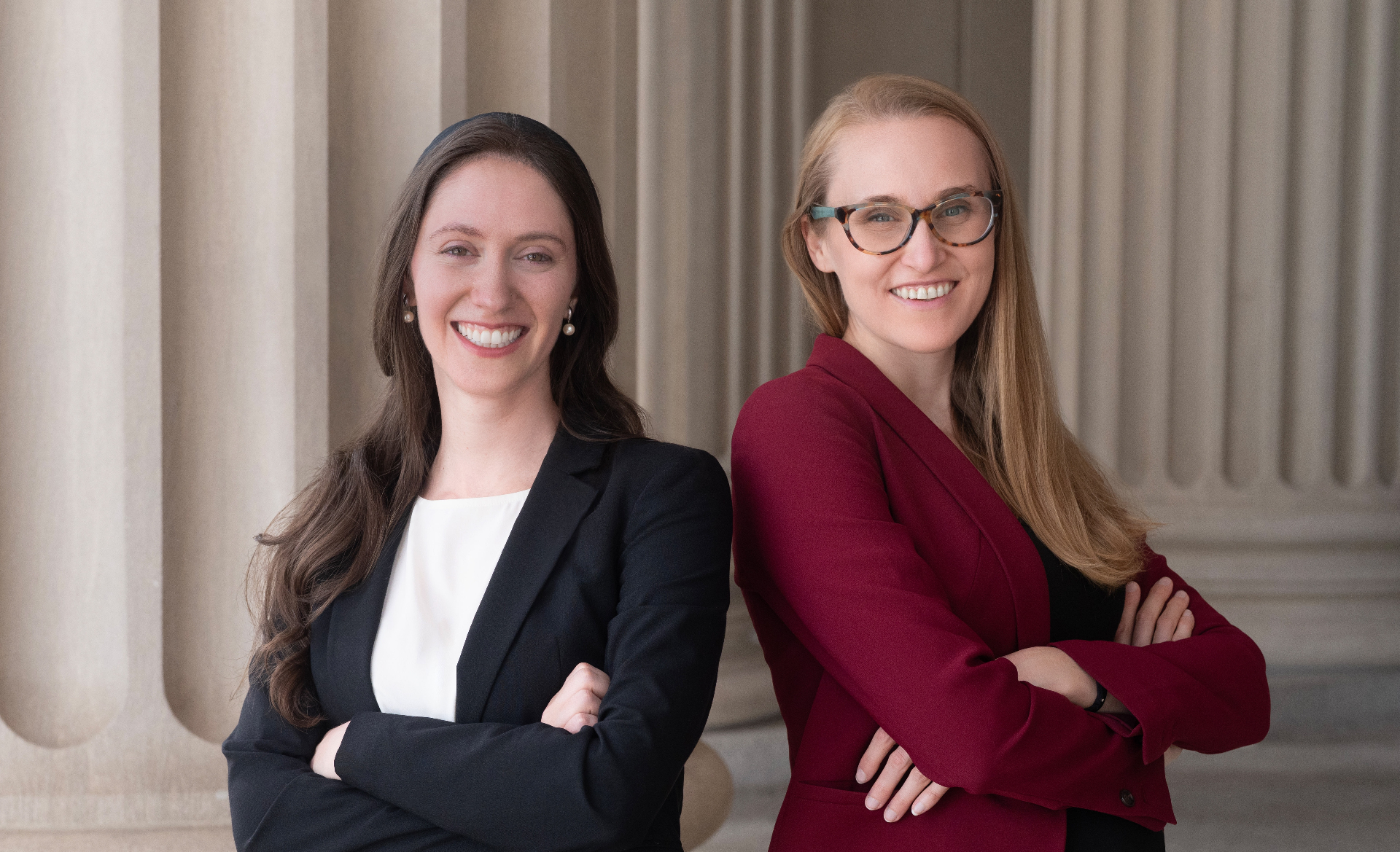
Emma and Natalia's work has been published in top journals including Science, the Quarterly Journal of Economics, and American Economic Journals. Their research has been featured in The New York Times, The Wall Street Journal, The Economist, BBC, The Atlantic's podcast, and NPR's PlanetMoney, among others.
Natalia and Emma met while working on their PhDs in labor economics at Harvard. In their second year, they were assigned to sit in the same basement office. At first, their conversations consisted only of polite chitchat. But as the months passed, they learned that their research interests overlapped. Each wanted to discover how workers and companies could both thrive. By the end of the year, they were collaborators — bouncing ideas off one another in person during the workday and over WhatsApp at odd hours. They continued to benefit from the power of being in person in their postdocs at Princeton's Industrial Relations Section. Though they moved 200 miles south, their desks remained just 10 yards away from one another's.
After their postdocs, the two finally had to discover first-hand how their collaboration would survive the distance. As the research suggests, collaborating remotely had a few more bumps: more misunderstandings, fewer break-throughs. But Natalia and Emma had the advantage of a longstanding collaboration and access to evidence on how to nurture their collaboration from afar — and make the most of their time together. This book shares those strategies and the data behind them.
 In Person